File Storage
Introduction
Bitcoin was designed as a state machine for decentralized agreement on payments, not for storing large quantities of data. While the protocol offers miners strong economic incentives for honest behavior, it provides no direct incentives for non-miners to run full nodes—and certainly none for storing provably prunable data like witness signatures or arbitrary payloads. Embedding file data directly in Bitcoin transactions externalizes costs to the entire network: a file stored on-chain must be downloaded and validated by every full node forever, creating a persistent burden that the uploader pays for once but the network bears indefinitely. This makes direct on-chain storage both economically prohibitive and contentious within the Bitcoin community.
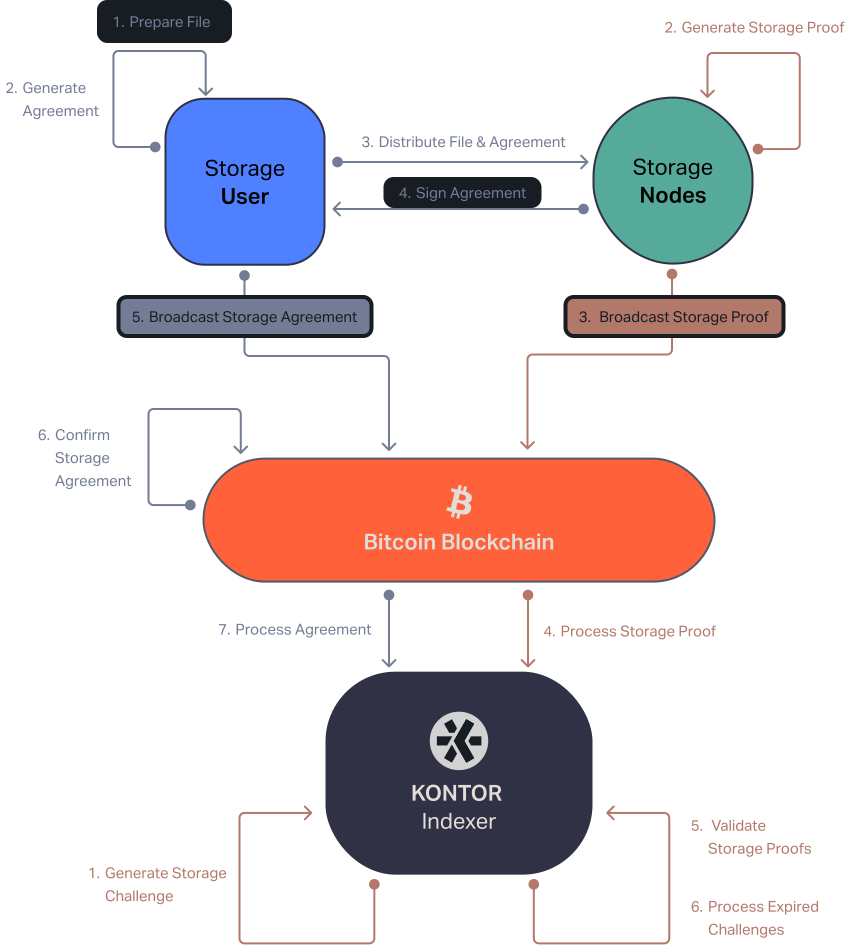
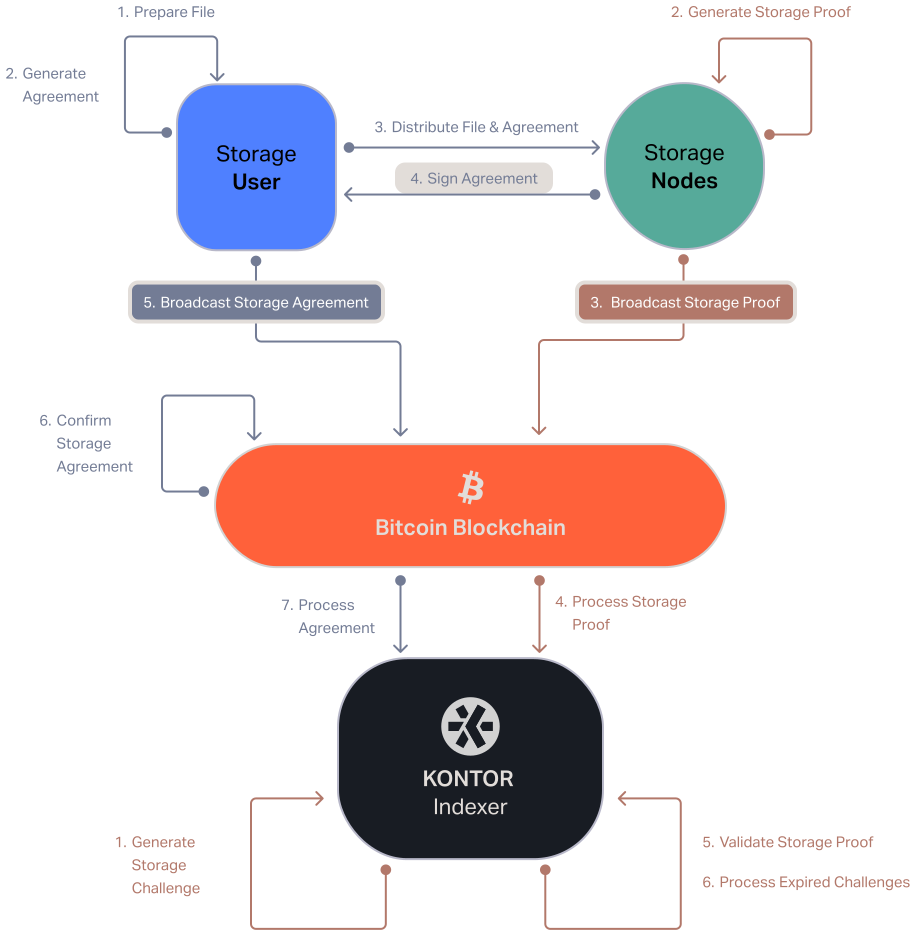
Yet blockchain applications need data with strong availability guarantees. NFTs need to reference images. DeFi protocols need state snapshots and oracle data. Assets need metadata. Kontor squares the circle: it provides Bitcoin users with scalable, permanent, off-chain file storage where the data storage system itself is entirely on-chain. The file contents live off-chain with storage nodes who are economically incentivized to maintain them forever. The blockchain records only the cryptographic commitments and periodic proofs of possession—the stateful components that require consensus. This architecture makes large-scale data storage economically practical while providing Byzantine fault-tolerant availability guarantees that are as strong as those of on-chain storage.